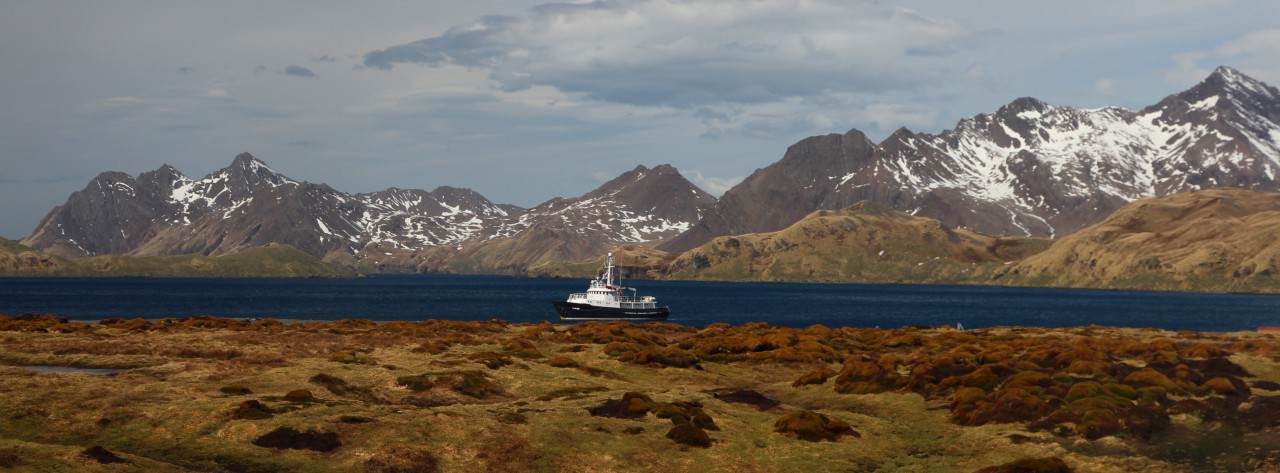
Icebergs are so varied. And of course I had a favorite. We sailed past it on several occasions in and out through the Lemaire Channel. This is by far the prettiest iceberg in the whole southern sea, it looks like a flower.
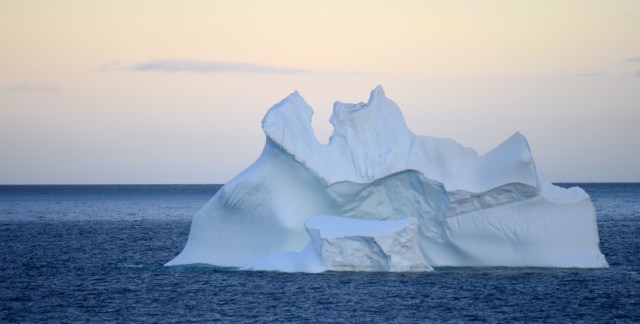 Here it is from another perspective. Farther away. Still pretty.
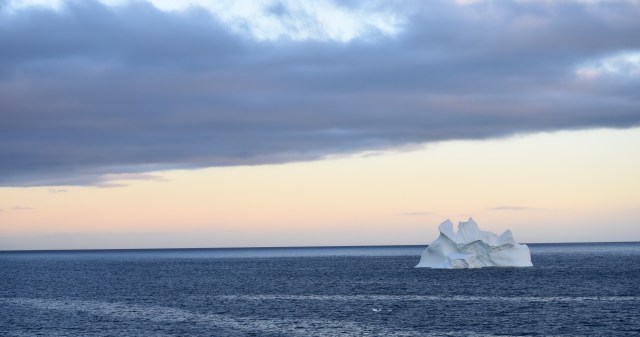 You know icebergs are only 9-10% visible. 90-91% floats below the surface.
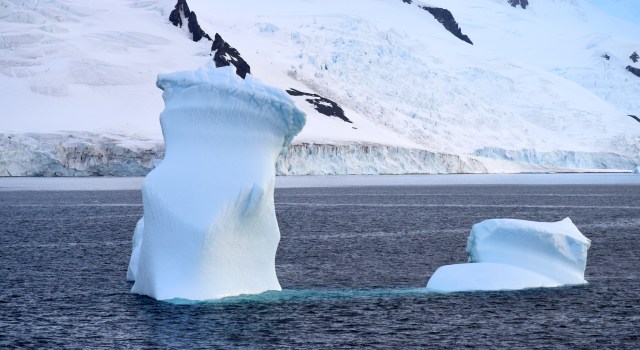
I’d love to know what this one looks like beneat the water.
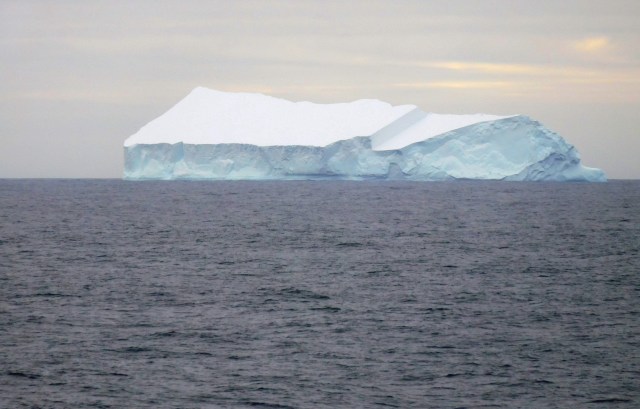
Antarctica has at its center a 1.7 km deep snow-ice cover that never melts… not much anyways. (For the metrically challenged that’s about 2 miles deep.) I’m not going to discuss sublimation, how it’s so dry in Antarctica that snow-ice evaporates instead of melting. Anyone with a freezer that self-defrosts is aware of ice cubes only 1/2 expected size when returning home to a cold drink after a lengthy vacation.
Snow packs deeper and harder for centuries and becomes ice. At a glacier’s bottom you can have ice packed so dense there is no oxygen-air bubbles in it. That’s where you get that crystal clear blue ice… that I didn’t get to see a lot of.
As the glacier flows out towards the edge of land, where it meets real water, some bits break off, calve, and floats away on the ocean surface and sometimes runs into big ships in the night. Although, with all the sonar and satellite imagery today that would be pretty hard to do.

Remember a few years ago that gigantic piece of ice that broke away from a frozen Antarctic sea and floated north? It was the size of Rhode Island. BIG. On the African side of the continent you see more of the BIG flat tabular (table-top-like) bergs.
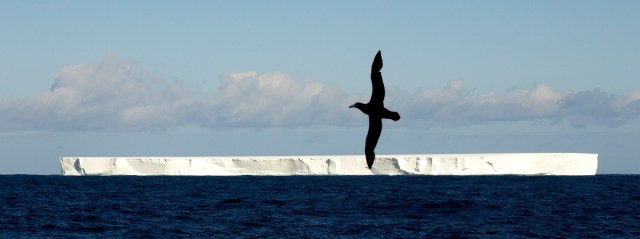
(This is not my photo… the internet gave me it.)
Glaciers wear away mountains. Look at the valley where there used to be rock.
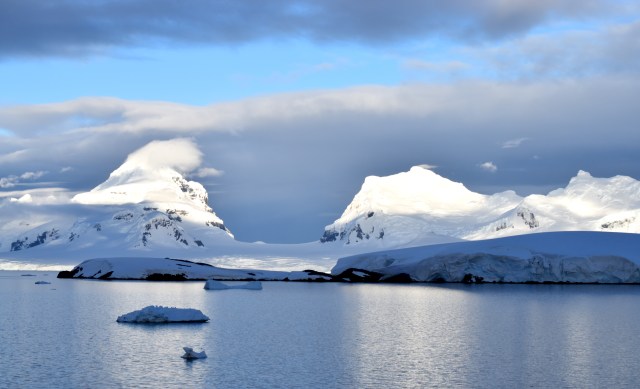
That missing rock has ended up bit by bit, season by season, like tree rings in the iceberg below. Sometimes water with silt flows over the top of the ice, to be buried in snow rings winter after winter. Sometimes the glacier picks up silt, stones, boulders as is slides over land. I saw a giant rock stuck in the side of an iceberg. The glacier underneath may be so heavy and pressurized that there might be an actual layer of water between the ice and its undersurface, usually rock.
In Illinois we’re pretty used to moraines, the pile of dirt and rock pushed ahead of a glacier and left behind as great ski-hills in our more civilized times. (Yes, there are a couple hills in the Midwest US…) Glaciers are an awesome force of nature, wearing away the mountains. Flowing water does the same. Think of the Grand Canyon. Glaciers are just water in another form.
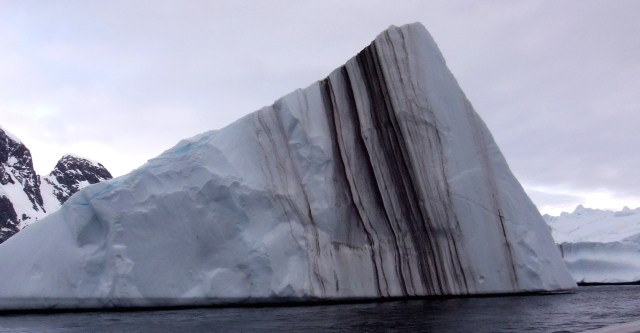
Also, some icebergs have surprises.
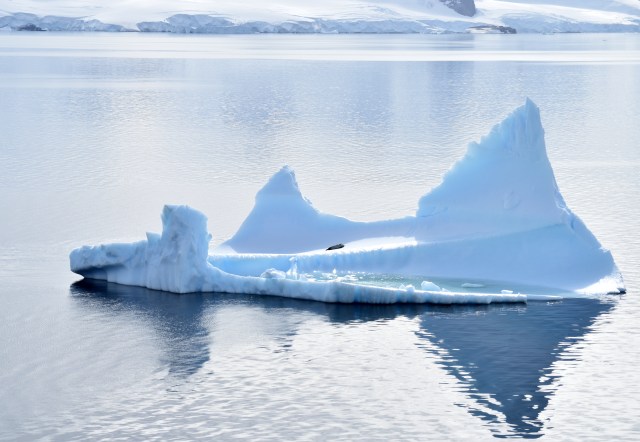
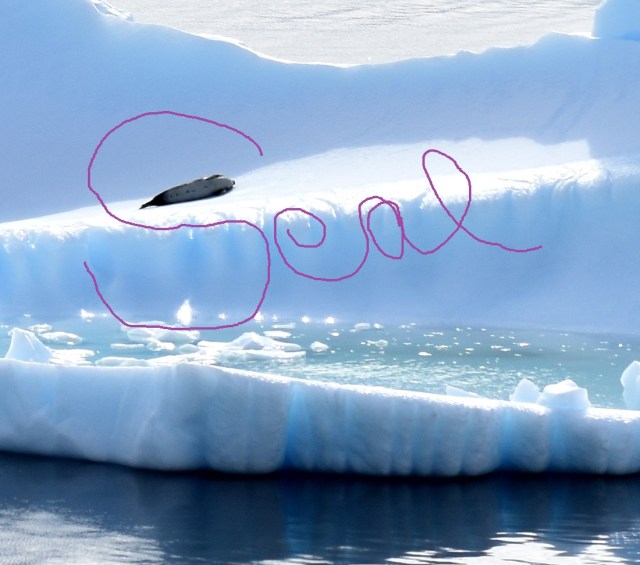
Some have a lot of surprises.

We were lucky. We saw quite diverse shaped ice formations, like all the following. And I photographed these myself.


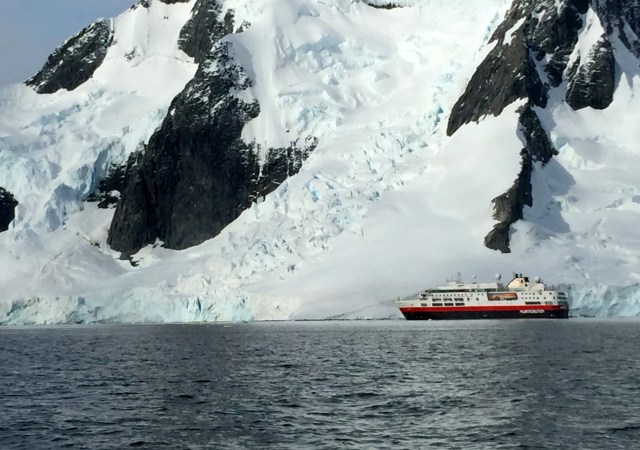
And finally, a picture of Iceberg’s mother. This is a smallglacier off to the right.
 icebergmuse.com
Love the pictures and information about the icebergs.
LikeLike
Thank you. We aimed to please!
LikeLike