Buenos Aires, Argentina

Buenos Aires, Argentina

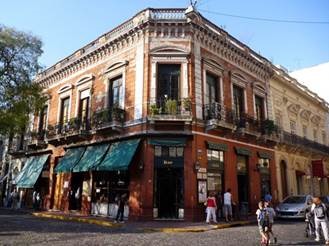
Our bus tour guide told us Argentina is a country founded by Spain, populated by Italians and trying hard to be French. The guide book explained Buenos Aires, Argentina’s capitol of almost 3 million people, is the Paris of South America. It certainly has an old European flavor, apartments and storefronts are designed to French standards and often by French architects.
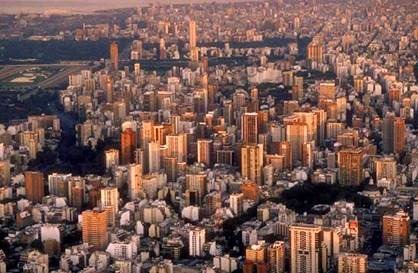
Buenos Aires reminds me of a blend of North America and Europe.
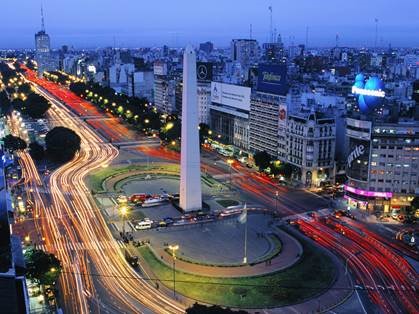
Buenos Aires even has an obelisk commemorating their independence like the one at Concorde Place, Paris.

It’s set in the middle of rich farmland where they grow soybeans and giant steaks. Coming from the Midwest USA I’m spoiled by good beef, but they are just as good at it here, possibly even better.

The streets are laid out the way I am used to from Chicago, a N-S or E-W grid system with a few diagonal afterthoughts. Intersections, however, are pretty unique. The corners of storefronts are cut off so the streets at intersections seem more open, all the corner areas being large triangles of sidewalk instead of shops cornering out and tripping you up.
On the way south by plane I sat next to a woman who laughed at my frustration trying to deal with the chaotic seating arrangements. She said: Welcome to Argentina!

Even though I flew with United Airlines and had selected my seats six months earlier and verified my selection earlier in the day, my seat assignment was changed at the gate. Usually that is not a problem, but when another passenger’s seat was also changed, but after they received their boarding pass so two people received the same assignment, chaos ensued. And when the same situation occurred throughout the cabin, at least six others had similar issues, the crew had their hands full.

Eventually the situation was, for better or worse, resolved. My seatmate was a charming blonde woman with the voice of a torch-singer and about sixty-five years old, travelling with her husband. She decided to take me under her wing to educate me on Argentinian politics… which seemed to be responsible for the situation that caused my seating problem…

I’m not reproducing the entire conversation here, but Argentinian history and politics is an extremely interesting subject and worth investigating.

It’s not more than forty years since about 38,000 people were kidnapped by the state, held at Argentinian police houses then tortured, drugged and dropped out of the back of military planes or helicopters into the deep South Atlantic ocean. The photo below is a memorial at the location where one of the police houses used to stand.

Sting even wrote a song about the mothers of the “disappeared”: They dance alone. Worth listening to. Mr. Pinochet, Argentina’s dictator, to distract from all their failed policies and Argentina’s unhappy situation then invaded The Falkland islands. Margaret Thatcher, the Prime Minister of the UK, to whom the Falklands belonged, said no, and sent people to kick Argentina off the sheep filled sparsely populated treeless islands. Even the US supported the UK with a Naval blockade.

You may wonder why all this seems important to me today. And I will explain. My trip to the oldest café in Buenos Aires, Café Tortoni, was made quite noisy by politics. The Café, founded in 1858, has charm and beauty and great alcohol laced coffees.
However, outside it, the city boiled with labor unions parading the streets with banners, flags, drums, and firecrackers. Outside Café Tortoni the teacher’s union and another education related union had a battle of speeches and zealous chants.


Apparently, the new president sworn in two months ago, well liked as far as I can tell, is battling corruption by firing all the workers who only show up once every two weeks to collect their checks, irrationally expecting workers to show up on every work-day even when they aren’t handing out paychecks.

I have to admit, I could never figure out what they were protesting. If they protested the firing of the employees who didn’t work for their salary, or the government that permitted that kind of corruption, or both.

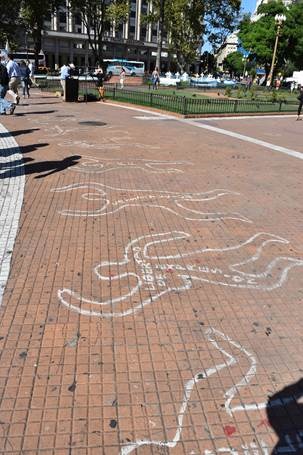
At the memorial square, Plaza de Mayo, where Argentinian independence from Spain is celebrated, the entire open area is ringed by drawings on the walkways. The drawings are painted outlines of bodies, like chalk marks drawn by police at murder scenes. Inside each outline, in Spanish of course, was written a word in paint, a word that named each “body” with the good things done by the government, such as, “education”, “unions”, “healthcare”. And trying to discover why outlines of bodies (that by some coincidence all had red paint spattered inside them like marks of blood), all had “good” things the government had done written inside them, defeated my powers of deduction.
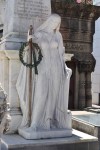
We also visited the six acre Recoleta Cemetery, a place of great beauty.

All mausoleums are personally owned like some of the old cemeteries in France. It’s where Evita Duarte Peron is interred.
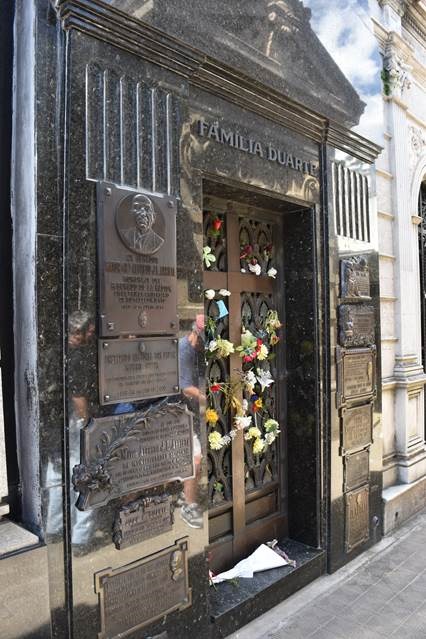
Evita, a girl born in poverty, a singer who married a man who became leader of Argentina after WWII, died at age 33 from cancer. She is known for style and charisma and stealing massive amounts of money from the Argentinian people. But the people of Argentina still adore her, in part for founding unions and helping workers gain rights.

On our way walking home past the Liberation Plaza we ran into the President of France laying a memorial wreath at Plaza de Maio, the Independence statue, you know, the one of Guido de San Martin, the guy who liberated them from Spain, using the French liberation as their blueprint.
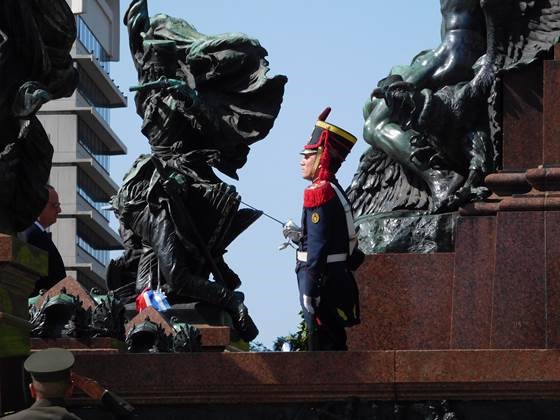
President of France, cool. Keep running into him.
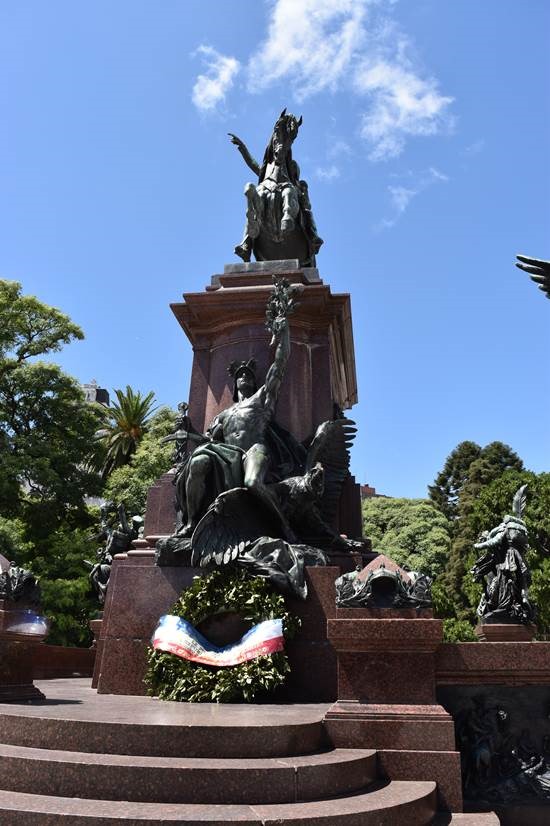
This country is a conundrum of inconsistencies and in more ways than one is a breath of fresh air.

Buenos Aires.
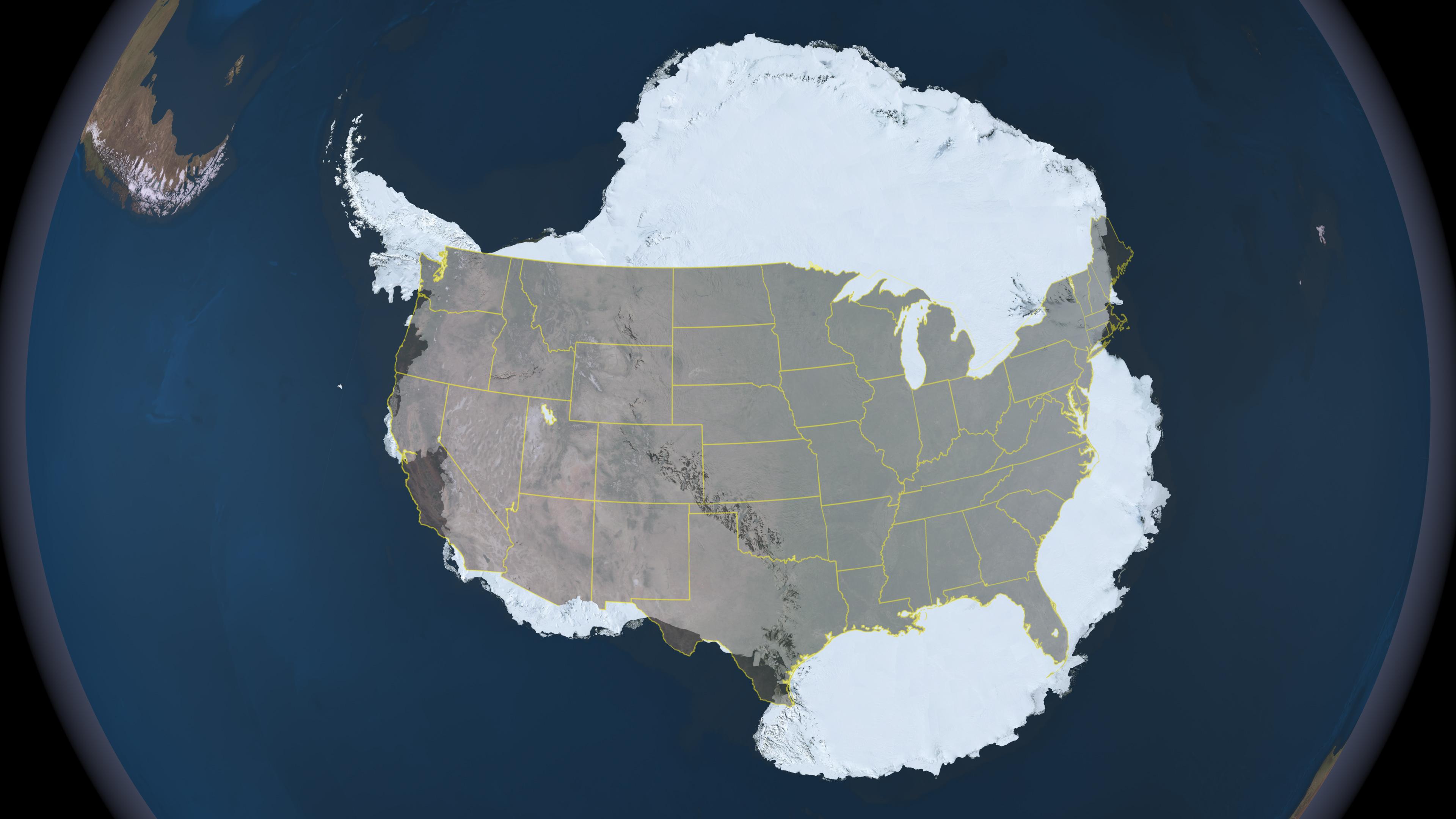
How big is The South Pole?

Antarctica, like the North Pole, doesn’t show up well on a map. Maps generally try to show in 2 dimensions what really exists on the surface of a sphere. Not a good way to represent it. Norway, for example, looks like a teaspoon when in reality it’s more like a long ice-tea spoon… OK…. not the best example. Anyways, here is Antarctica with a great big country pasted on top of it for comparison.

Size comparison.

Anne

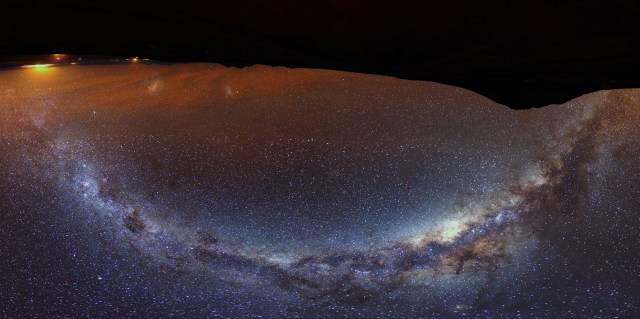
The Milky Way (but upside down!)

One of the experiences I’m looking forward to most is floating out on the ocean about as far from man-made lights as a human can get and on a clear night being able to see the Milky Way. In Norway or “out west” in the US the Milky Way is visible on cloudless nights, sometimes impressive, sometimes not so much. But I often go years between viewings. Since this trip will be through most of March there should be enough night to get a pretty good look at it. Will be posting pictures of possible from a moving ship. If I’m not so lucky, here is a beautiful, (but borrowed), picture of the item in question.

2014_star_0012

The Drake Passage.

feb7f8e4e473986d5c1f1b9a09613c3cThinking about the power of water is pretty abstract. Even looking at a place like the Grand Canyon it’s hard to grasp that innocent drops of water carried away its entire inside.
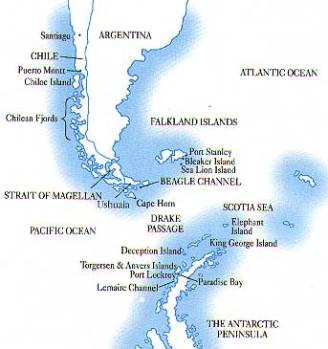
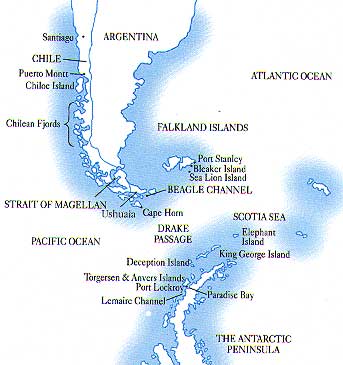
The Drake Passage is one of those interesting places in the world where water matters quite a lot. If you look at the globe, you see Antarctica on the bottom, and surrounding it is water, the Antarctic Ocean. This ocean is pretty much made up of the southern parts of the Pacific Ocean on one side (between Australia and Hawaii) and the Atlantic Ocean  (between Argentina and South Africa) and on the other.

This Antarctic Ocean rolls around above Antarctica unobstructed as the Earth spins, sometimes subjected to massive wind storms that shake up this water, sometimes into giant rolling waves 100 feet from trough to peak.

map2

But there is a problem. The bottom tip of South America, Cape Horn, sticks out south towards another tip of Antarctica that reaches north.


(Something about them being attached millions of years ago as part of that big landmass I can never remember the name of from before the dinosaur times.)


The Atlantic Ocean is warmer than the Pacific Ocean, and both of them have their own flowing currents, not in the same direction,  and when they mix down between Cape Horn and the Antarctic Peninsula it’s not exactly predictable.

So, all those giant waves roll around the Earth until they hit this narrow gap, and as they still need to keep rolling around, even though the channel between the two points of land narrows, the speed of the water passing through this channel has to speed up. And it becomes turbulent, and if you add some unruly winds, wildness results. Rogue waves are the kind of waves ships don’t like to meet sailing down a dark canal at night, you know, like the one that took out the cruise ship, the Poseidon, in that adventure movie about the people who had to climb through an upside down ship.

I can’t help think about the man the channel is named for, Sir Frances Drake (1540-1596), the first captain to get credit for surviving the trip. How those people in all those wooden sail ships survived in places like this is something I can’t wrap my understanding around. In freezing weather climbing 80 foot masts in bare feet to move thick ropes and sails coated with tons of frozen sea-spray in winds and seas so wild you can barely hold on to your perch… befuddles my imagination.

And that is the Drake Passage.

Drake-Passage-map


Sharing summer cruise memories with friends.

After making the decision to *finally* take this trip to the Antarctic, my natural impulse was to record it in excruciating detail. I wanted to remember everything and to be able to re-visit it in the future in my augmented memories. I made sure I had a camera for great pictures, and as a writer, I had little choice but to write. And I wanted to share it with you, my friends, you not adverse to looking at other people’s vacation pictures and listening to long tales.
Then, I had to learn to set up a blog site. I’ll try to get my facts, spelling and grammar right but don’t recommend this site as background for your scientific research. Remember, the main reason I’m writing this is to record memories for myself, it isn’t edited for brevity or warts so read to your own interest.

I’d love your feedback or comments.

Thanks for reading this far! And have fun sharing my journey to the icebergs.

Anne

My journey to Argentina, The Falklands, South Georgia and Antarctica.

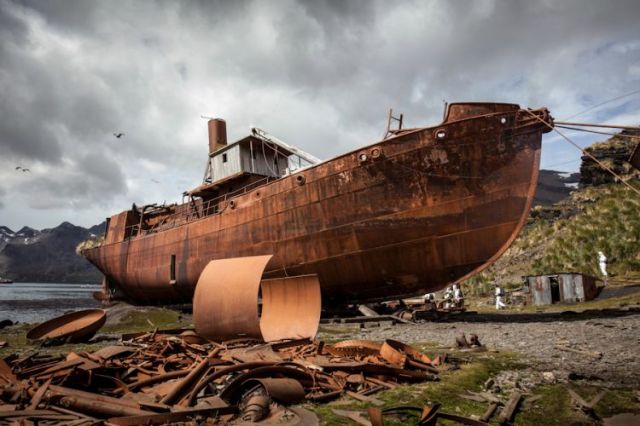
South-Georgia-Karrakatta-Wreck-Husvik-Whaling-Station2
An abandoned whaling ship rusts away along the shore of South Georgia, an island in the South Atlantic no longer inhabited by humans, although by no means uninhabited. Many species of birds including penguins, seals, and even whales live there. Even a herd of rain deer still run along the South Georgian hills, brought by whalers about one-hundred fifty years ago to vary the diet of the whalers from the fishy taste of penguin, seal, whale and, of course, fish.
f1eee5fa-b638-44ef-b340-f37a00c055de
Another reminder of the old whaling community on South Georgia.

As a whaler, my father was gone most of my childhood. I have few memories of him besides a few carved whale teeth, one into the shape of a penguin with a top hat and cane. And probably the most important the pictures he brought home of life on South Georgia and the fantastical images that showed the processing of these giant dead creatures. Photographs of whalers and their long deadly looking knife blades and the imagining of living in such a small community with all that oil, smoke and blood and no running water caught my imagination.

As a Norwegian girl, snow, the sea and figuring out what lay beyond the horizon seemed a normal part of life. Exploration seemed part of our genetic makeup for someone brought up hearing, and later reading to my own son, stories of the Vikings who traveled from Russia to the Middle-East and America. And then stories of Nansen and his MS Fram exploration of the North Pole and of course Amundsen who ‘borrowed’ that same ship for his unannounced and somewhat unwelcome trip to command the first team to the South Pole. Excitement, heroism and soap-opera drama seemed part of their world.

Later, when the International Trans-Antarctic Expedition of 1989-1990 received so much publicity I thought again of what choosing such a challenging job would be like. I discovered Ernest Shackleton’s voyage of The Endurance and was hooked for life on dreams of life around the Southern limits of our world. For me that included South Georgia, as this was the usual staging place for the European explorers such as Shackleton and Amundsen. And maybe Scott should be included as well. His public relations machine certainly has him remembered fondly, although posthumously. Being a snob I never paid much attention to the Australian explorers until I read Mawson’s accounts. He changed my mind. He kept detailed journals and perhaps a little more objective accounts than some of the other explorers and certainly more objective than a few of the hero worshiping authors writing about the journeys of Scott or Amundsen. Although evaluating honesty and objectivity in a writer from one-hundred years away isn’t easy. And it’s strange to think of a man like Mawson, who was a young man in his prime at the time so long ago of his trips to the Antarctic continent, that he died three years after I was born.

The final influence on my interest in the South Atlantic Ocean was reading the books of Patrick O’Brian. He wrote twenty one historical fiction books about Jack Aubrey, a sea captain who sometimes ran into trouble hauling on frozen ropes around the 1800’s, at the start of the whaling industry. One of his stories had the ship in trouble barely surviving an encounter with an iceberg and ending up on here shore of Desolation Island finally rescued when a whaling ship came by and loaned them the use of their forge to fix their rudder. The accounts of the conditions of sailing ships two centuries ago gives me chills and makes me want to order room service, STAT.

But here I am, on my way to Ushuaia Argentina, as thestaging point for my three week cruise to places I have often visited in my dreams.

Before I begin…


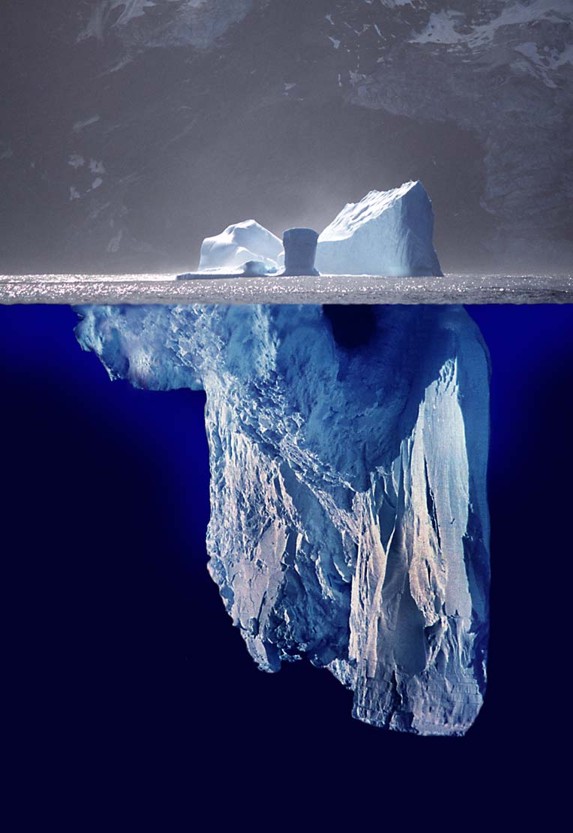
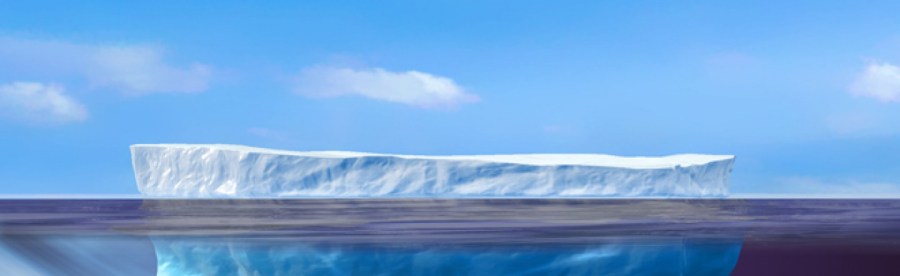
Iceberg.jpg

Icebergs are like people. Most of what we are exist beneath the surface. It takes someone special to look for what’s hidden under all that water. We’re mostly made of water, too. Maybe that’s why the analogy works so well.


Writing prompt: Demonstrate a characters personality trait in subtext.

In one of your more boring scenes, write in something one of your characters does  that demonstrates in subtext a previously unmentioned aspect of their personality that has direct impact on one other character in your scene.